
Real Talk
Perimenopause Symptoms Checklist: 25 Signs Your Hormones Are Shifting
Perimenopause can start years before your last period and look nothing like you expected. Use this checklist to recognize the…
For women in perimenopause, menopause and beyond
Plain-English guides to symptoms, sleep and treatment options, grounded in current research and written with care.
Real Talk
Perimenopause can start years before your last period and look nothing like you expected. Use this checklist to recognize the…

Hormones and HRT
Can't take hormones or would rather not? There are more proven non-hormonal options than ever. Here is how they compare.
Weight and Metabolism
Many women gain weight around the middle in midlife even without changing their habits. Here is why, and what the…
Hot Flashes and Night Sweats
Night sweats are hot flashes that strike while you sleep. Here is why they happen, what the evidence says helps,…
Free guide
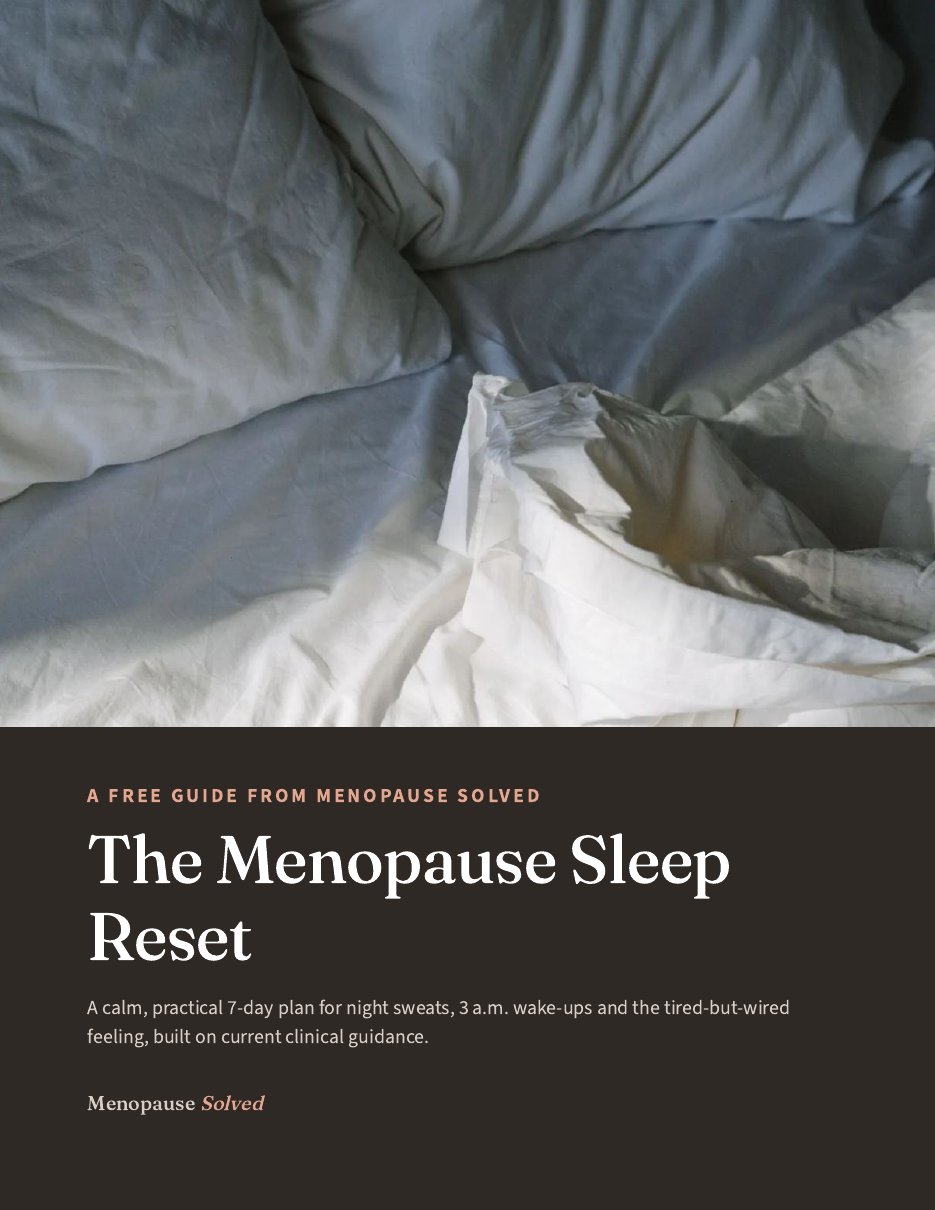
Night sweats, 3 a.m. wake-ups, tired but wired? A 12-page plan you can start tonight, built on current clinical guidance.
Get it free Join the Circle
Bone and Heart Health
Stiff, achy joints are one of the most common but least discussed menopause symptoms. Here is why it happens and…
Sleep and Menopause
Sleep problems are one of the most common complaints of the menopause transition. Here is what causes them and the…
Mood and Mental Health
Forgetting words, losing your train of thought, struggling to focus: menopause brain fog is real, common, and for most women…

Mood and Mental Health
New anxiety in your 40s is often hormonal. Here is why perimenopause can trigger worry, panic and irritability, and the…

Hormones and HRT
Hormone therapy is the most effective treatment for hot flashes, but it is not right for everyone. Here are the…

Real Talk
Menopause is technically one day, but the transition and its symptoms can span years. Here is a realistic, research-based timeline.

Hot Flashes and Night Sweats
Hot flashes affect most women during the menopause transition. Here is the science behind them and the relief options that…
Real Talk
Menopause before 45 is more common than many people think. Here are the signs, causes, how it is diagnosed, and…

Natural Remedies
The menopause supplement aisle is huge. Here is what the evidence actually says about the most popular options, and which…
Contributors
We’re building a community of voices on menopause. If you’re a doctor, nurse practitioner, dietitian, therapist or writer, we’d love to hear from you.
Free guide + the Menopause Solved letter
Get the Menopause Sleep Reset free, then one calm, evidence-based email a week. No hype, no spam.